

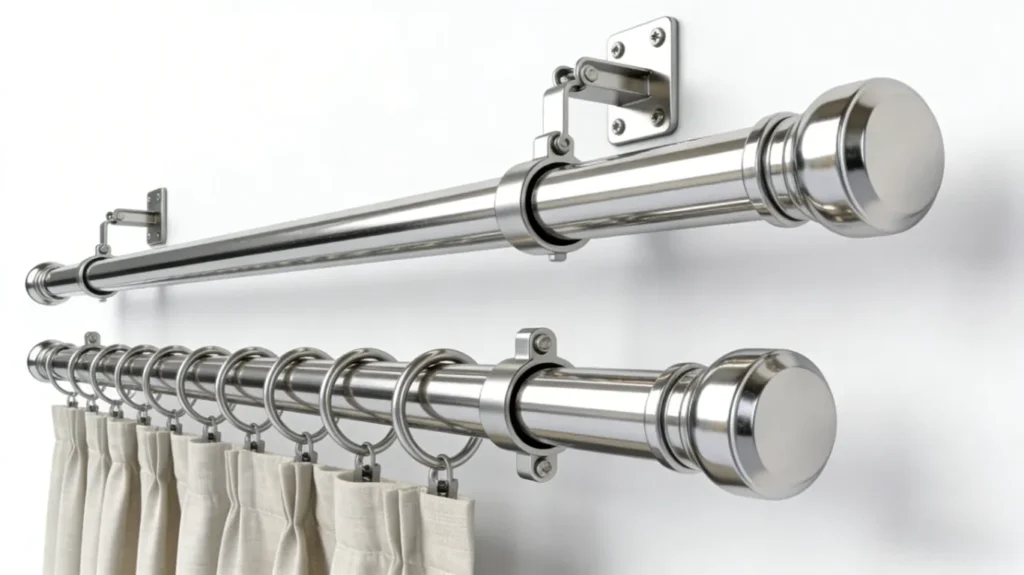
Introduction: Why Double Curtain Rod Selection Matters for B2B Buyers
For B2B buyers such as interior design firms, hospitality project managers, real estate developers, and window treatment wholesalers, selecting the right curtain rod for double curtains is not a decorative afterthought—it is a functional and structural decision that affects durability, installation efficiency, long-term maintenance, and customer satisfaction.
Double curtain systems are widely used in hotels, serviced apartments, commercial offices, and high-end residential projects, where sheer curtains and blackout curtains must operate smoothly on a single window. Choosing an unsuitable curtain rod can result in load failure, uneven curtain movement, wall damage, or increased after-sales costs.
This guide explains how to choose the best curtain rod for double curtains from a professional, technical, and B2B-oriented perspective.
Understanding Double Curtain Systems in Commercial Applications
A double curtain setup typically consists of:
- Front layer: blackout, thermal, or decorative curtains
- Back layer: sheer or privacy curtains
From a B2B standpoint, the curtain rod must support:
- Higher combined fabric weight
- Frequent daily operation
- Long spans across large commercial windows
- Consistent appearance across multiple rooms or units
This is why standard residential rods often fail in contract-grade projects.
Key Load-Bearing Requirements for Curtain Rods for Double Curtains
1. Weight Capacity (Often Overlooked)
For B2B installations, always calculate total curtain weight per linear meter.
Typical benchmarks:
- Sheer curtain: 0.5–0.8 kg/m
- Blackout curtain: 1.2–1.8 kg/m
- Combined load: 2–2.6 kg/m
Recommended rod load rating:
- Minimum: 5 kg/m
- Hospitality-grade projects: 8–10 kg/m
Long-tail keyword naturally used: heavy duty curtain rod for double curtains
Single Rod vs Double Rod: What Works Best for Commercial Projects?
Single Rod with Double Track Design
Best for:
- Hotels
- Uniform large-scale projects
- Ceiling-mounted systems
Advantages:
- Cleaner appearance
- Easier bulk installation
- Lower visual clutter
Limitations:
- Requires precision engineering
- Limited flexibility after installation
Double Curtain Rod Systems
Best for:
- High-end residential developments
- Custom interior design projects
Advantages:
- Independent operation
- Better curtain spacing
- Easier replacement
Limitations:
- Higher material cost
- More wall anchors required
Choosing the Right Diameter and Wall Thickness (Technical Detail)
Professional buyers should focus on tube diameter and wall thickness, not just aesthetics.
| Application | Recommended Diameter | Wall Thickness |
|---|---|---|
| Standard double curtains | 25–28 mm | ≥1.2 mm |
| Heavy blackout + sheer | 28–32 mm | ≥1.5 mm |
| Extra-wide windows (>3m) | 32–38 mm | ≥1.8 mm |
Material deformation threshold becomes critical beyond 2.4 meters without center support.
Material Selection: Performance Over Appearance
Steel Curtain Rods (Most Common for B2B)
- High tensile strength
- Compatible with powder coating
- Cost-effective for bulk orders
Aluminum Alloy Curtain Rods
- Lightweight
- Corrosion-resistant
- Ideal for coastal or humid regions
Stainless Steel (304 / 316)
- Premium commercial projects
- Higher cost
- Excellent long-term durability
Long-tail keyword: commercial curtain rod for double curtains
Mounting Methods: Wall vs Ceiling in B2B Projects
Wall-Mounted Double Curtain Rods
- Faster installation
- Compatible with drywall and concrete
- Requires high-quality anchors
Ceiling-Mounted Systems
- Preferred in hotels and offices
- Better load distribution
- Cleaner visual lines
Anchor recommendation:
- Concrete: M6–M8 expansion bolts
- Drywall: metal toggle anchors only
Brackets and Support Spacing (Critical for Long Spans)
Improper bracket spacing is a common cause of sagging.
Professional guideline:
- ≤1.2 m between brackets for double curtains
- Add center support for spans >2.4 m
- Use reinforced double brackets, not decorative ones
Finish and Coating for Commercial Durability
Recommended finishes:
- Electrostatic powder coating (60–80 μm)
- Anodized aluminum (≥10 μm)
- Anti-scratch matte finishes for hospitality
Avoid:
- Thin spray paint
- Gloss finishes prone to fingerprinting
Compliance, Standards, and Project Documentation
For B2B buyers, curtain rods should meet:
- ISO 9001 manufacturing standards
- SGS load testing reports
- Fire safety compliance for hospitality projects
- Consistent SKU documentation
These elements strengthen EEAT (Experience, Expertise, Authoritativeness, Trustworthiness) in procurement decisions.
Common Mistakes B2B Buyers Should Avoid
- Choosing decorative rods for contract projects
- Ignoring total fabric weight
- Underestimating installation substrate
- Mixing suppliers within one project
- Skipping load test certification
Conclusion: Making the Right Choice for Long-Term Performance
Choosing the best curtain rod for double curtains in a B2B context requires a balance of engineering, durability, and installation efficiency. By focusing on load capacity, material strength, mounting method, and certified performance standards, buyers can reduce maintenance issues, improve project consistency, and deliver long-term value to end clients.
For commercial and contract projects, a curtain rod is not an accessory—it is a structural component. Selecting it correctly ensures performance, safety, and professional credibility.