

Introduction
Installing curtain tracks on the ceiling is a common solution for commercial and residential spaces where wall space is limited or when a clean, modern aesthetic is desired. For B2B clients, including office fit-outs, hotels, and event spaces, precision installation of ceiling-mounted curtain tracks ensures durability, smooth operation, and professional appearance.
Ceiling-mounted tracks are especially popular for heavy-duty applications, such as blackout curtains in hotels or partition systems in office environments. This guide covers step-by-step instructions, technical parameters, SEO-optimized insights, and professional best practices.
Why Choose Ceiling-Mounted Curtain Tracks?
- Space Efficiency: Frees wall space for furniture or equipment.
- Enhanced Aesthetics: Seamless floor-to-ceiling curtains create a modern, streamlined appearance.
- Versatility: Supports straight, curved, or flexible track systems for complex layouts.
- Durability: Heavy-duty aluminum or steel tracks can handle commercial-grade curtains.
Technical Parameter Note: Opt for aluminum extrusion tracks with 1.5-2mm wall thickness for commercial applications. For curved layouts, consider flexible steel tracks rated for a minimum 15kg/m curtain load.
Tools and Materials Required
- Ceiling curtain track (aluminum or steel, pre-drilled if possible)
- Brackets and end stops compatible with the track system
- Rollers, gliders, or carriers
- Measuring tape
- Spirit level
- Drill with appropriate bits (masonry, wood, or metal)
- Heavy-duty screws and anchors (suitable for ceiling type)
- Pencil or chalk line for marking
- Screwdriver or power driver
- Ladder or scaffolding
- Safety glasses and gloves
Planning and Measurement
- Assess the Ceiling Structure: Confirm whether the ceiling is concrete, drywall, or a suspended system. Heavy curtains require solid anchoring points.
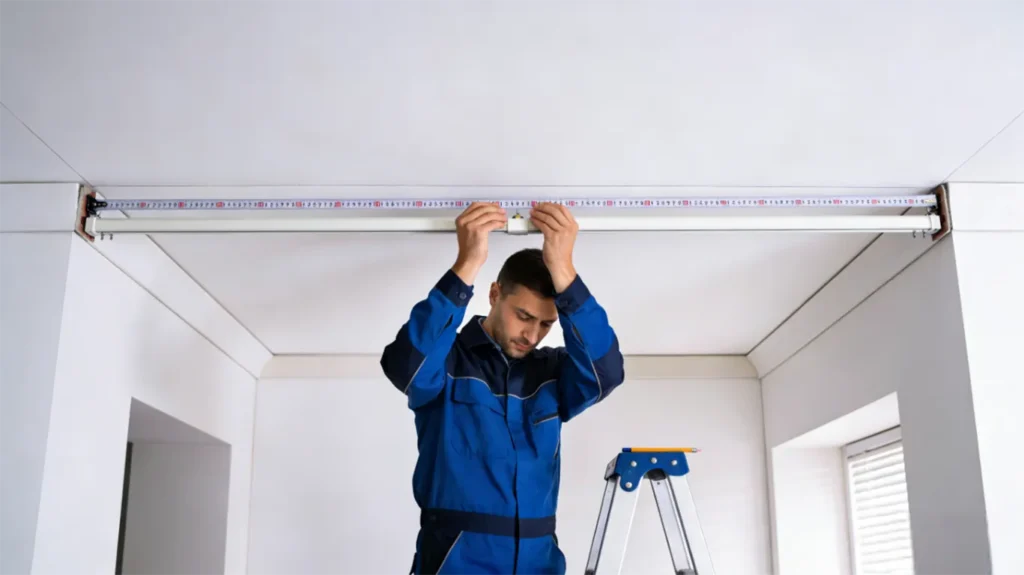
- Measure Width: Accurately measure the window or partition width.
- Determine Curtain Overlap: Add extra width (typically 15-20cm on each side) to allow for full curtain closure.
- Mark Bracket Positions: Brackets should be placed every 30-50 cm for commercial heavy-duty curtains.
- Level Marking: Use a spirit level or laser level to ensure horizontal alignment.
Selecting the Right Track System
- Aluminum Tracks: Lightweight, corrosion-resistant, suitable for most commercial interiors.
- Steel Tracks: Recommended for heavier curtains or high-frequency use.
- Flexible Tracks: For curved or irregular layouts; ensure they have bend radius specifications of at least 50mm for tight curves.
Technical Tip: For heavy curtains exceeding 20kg per track section, use reinforced carriers rated at 25kg each, ensuring smooth glide without deformation.
Preparing the Ceiling
- Locate Ceiling Joists or Concrete Areas: Use a stud finder or scanning device to ensure screws anchor into solid structures.
- Mark Drill Points: Align with bracket positions and mark precisely.
- Drill Pilot Holes: Use appropriate drill bits based on ceiling type.
- Install Anchors: For drywall, use toggle bolts; for concrete, use masonry anchors.
Professional Insight: Ensure that anchors are rated for at least 1.5x the curtain weight to accommodate dynamic loads during operation.
Installing the Brackets
- Position Brackets: Align with marks and maintain consistent spacing.
- Secure Brackets: Use heavy-duty screws and torque to manufacturer specifications.
- Double-Check Level: Re-check with a spirit level before mounting the track.
Mounting the Track
- Attach Track to Brackets: Slide the track into the bracket slots; ensure proper fit.
- Secure with Screws or Fasteners: Confirm track does not shift.
- Insert Rollers or Gliders: Follow manufacturer instructions for smooth operation.
- Install End Stops: Prevent gliders from sliding out.
- Test Movement: Pull the curtain to check for smooth glide without friction.
Finishing Touches
- Check Alignment: Ensure curtains hang evenly and do not touch the floor excessively.
- Lubrication: Use silicone spray on gliders for smoother operation.
- Inspect Safety: Verify that all brackets and anchors are secure.
- Maintenance Plan: Schedule periodic inspection for high-frequency commercial use.
Professional Tip: For B2B clients, provide a load chart showing maximum curtain weight per meter of track and recommended maintenance intervals.
Recommended Materials and Technical Specifications
| Material | Thickness | Load Capacity | Ideal Use |
|---|---|---|---|
| Aluminum Extrusion | 1.5-2mm | 15-25kg/m | Office, hotel, retail partitions |
| Steel Track | 2-3mm | 30-40kg/m | Heavy blackout curtains, high-frequency commercial use |
| Flexible Steel Track | 1.8mm | 15kg/m | Curved partitions, non-linear designs |
Conclusion
Ceiling-mounted curtain tracks provide a clean, versatile, and professional solution for commercial spaces. By carefully planning measurements, selecting the right materials, securely anchoring brackets, and properly installing tracks and gliders, B2B clients can ensure durability, smooth operation, and a polished finish. For heavy curtains or curved layouts, attention to technical parameters and proper maintenance guarantees long-term performance and safety. Following these best practices not only enhances aesthetics but also minimizes operational issues, delivering a reliable curtain system for commercial environments.