

Introduction
In modern interior and architectural projects, curtain track selection is no longer a purely decorative decision. For B2B buyers, architects, contractors, and interior fit-out companies, choosing between wall-mounted and ceiling-mounted curtain tracks directly affects load performance, installation complexity, maintenance costs, and long-term reliability.
Both systems are widely used in hotels, apartments, offices, healthcare facilities, and large residential developments across Europe and North America. However, they are designed for different structural conditions and project goals. This article provides a technical, experience-based comparison of wall-mounted vs ceiling-mounted curtain tracks, helping project stakeholders make informed decisions based on real-world requirements rather than aesthetics alone.
Understanding Curtain Track Mounting Methods
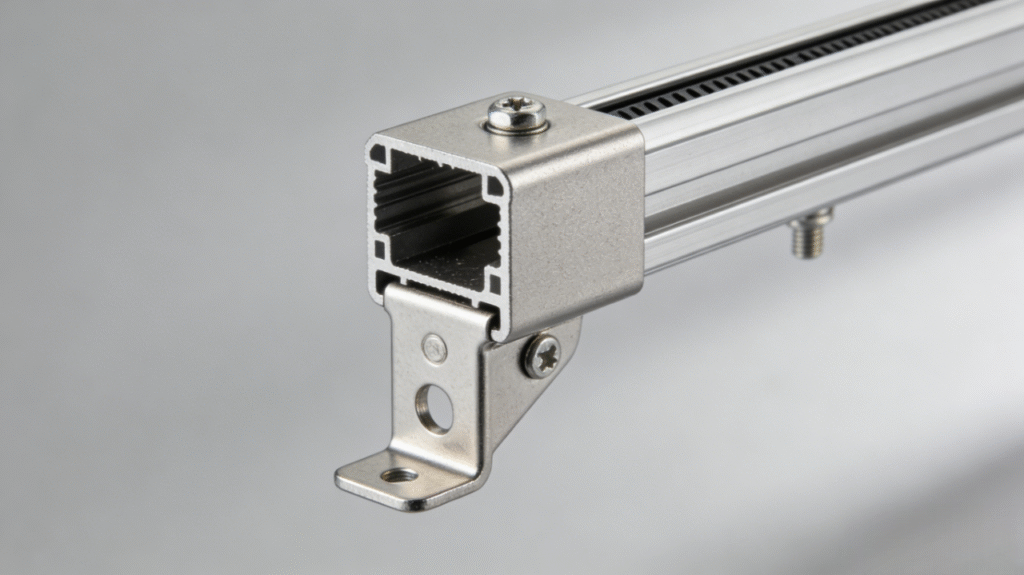
Curtain tracks are linear aluminum or steel rail systems fixed either to the wall or ceiling, designed to carry curtain fabrics via gliders or rollers.
Common Materials and Construction
- Extruded aluminum alloy (6063-T5 / 6061-T6)
- Wall thickness: 1.2–2.2 mm
- Surface finish: anodized, powder-coated, or mill finish
Mounting method determines how load is transferred to the building structure and how the system performs over time.
Wall-Mounted Curtain Tracks: Features and Applications
Structural Characteristics
Wall-mounted curtain tracks are fixed to vertical substrates such as concrete, drywall with studs, or masonry walls.
Typical Technical Parameters:
- Load rating: 6–10 kg per linear meter
- Bracket projection: 70–120 mm
- Recommended bracket spacing: 500–700 mm
Load is transferred horizontally into the wall, making substrate quality critical.
Advantages of Wall-Mounted Curtain Tracks
- Compatible with existing buildings and renovations
- Easier installation and alignment
- Lower ceiling dependency
- Suitable for smaller windows and standard ceiling heights
Limitations of Wall-Mounted Systems
- Higher bending moment on brackets
- Limited load capacity for heavy blackout curtains
- Visual interruption of minimalist interiors
- Reduced suitability for floor-to-ceiling glazing
Field Insight: In hotel retrofit projects, wall-mounted tracks account for higher bracket fatigue when curtain weight exceeds 8 kg/m.
Ceiling-Mounted Curtain Tracks: Features and Applications
Structural Characteristics
Ceiling-mounted curtain tracks are fixed directly to concrete slabs, steel beams, or reinforced ceiling structures.
Typical Technical Parameters:
- Load rating: 8–15 kg per linear meter
- Bracket spacing: 400–500 mm
- Anchor pull-out strength: ≥ 1.5–2.0 kN per fixing
Load is distributed vertically, resulting in better performance over long spans.
Advantages of Ceiling-Mounted Curtain Tracks
- Even load distribution
- Ideal for large windows and sliding doors
- Clean, architectural appearance
- Preferred for hotels, serviced apartments, and offices
- Better compatibility with motorized curtain tracks
Limitations of Ceiling-Mounted Systems
- Requires sufficient ceiling load-bearing capacity
- More complex installation planning
- Coordination needed with ceiling finishes and MEP systems
Wall-Mounted vs Ceiling-Mounted Curtain Tracks: Technical Comparison
| Parameter | Wall-Mounted | Ceiling-Mounted |
|---|---|---|
| Load Capacity | 6–10 kg/m | 8–15 kg/m |
| Bracket Spacing | 500–700 mm | 400–500 mm |
| Visual Impact | Moderate | Minimal |
| Installation Complexity | Low | Medium |
| Motorization Compatibility | Limited | Excellent |
| Best Use Case | Renovation, small windows | New build, large openings |
Key Decision Factors for B2B Buyers
Curtain Weight and Fabric Type
Heavy blackout curtains and multi-layer systems significantly increase load.
Recommended Safety Factor:
- Actual curtain weight × 1.5–2.0
Ceiling-mounted tracks are generally safer for weights above 8 kg/m.
Window Size and Opening Configuration
- Floor-to-ceiling windows
- Sliding glass doors
- Corner or curved layouts
Ceiling-mounted systems provide greater flexibility for complex geometries.
Installation Environment
- Concrete vs drywall substrates
- New construction vs renovation
- Ceiling recess or exposed mounting
Improper substrate assessment is a common cause of system failure.
Maintenance and Lifecycle Cost
| Factor | Wall-Mounted | Ceiling-Mounted |
| Average Lifespan | 8–12 years | 10–15 years |
| Maintenance Frequency | Medium | Low |
| Replacement Complexity | Moderate | Low |
Common Specification and Installation Mistakes
- Selecting wall-mounted tracks for oversized windows
- Underestimating curtain stacking depth
- Ignoring thermal expansion (> 1.5 mm/m)
- Insufficient bracket density in long spans (>6 m)
Compliance and Project Standards
In commercial projects, curtain track systems often need to comply with:
- Fire-retardant curtain compatibility
- Noise control requirements (≤ 30 dB)
- Hotel brand or developer specifications
Ceiling-mounted systems are more frequently specified in standardized project tenders.
Conclusion
Choosing between wall-mounted and ceiling-mounted curtain tracks is a technical and strategic decision for B2B projects. Wall-mounted systems offer flexibility and simplicity for renovations and smaller openings, while ceiling-mounted curtain tracks deliver superior load performance, cleaner aesthetics, and longer service life for large windows and commercial environments.
For contractors, developers, and procurement teams, evaluating load requirements, substrate conditions, and long-term maintenance costs ensures the selected curtain track system supports both functional performance and project profitability.