

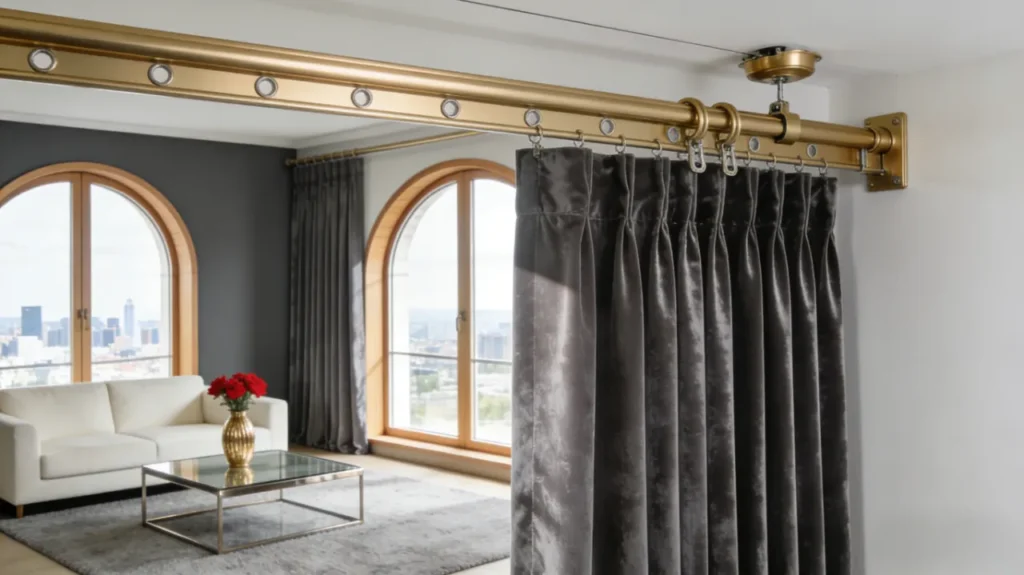
Introduction: The Importance of Choosing the Right Curtain Tracks
For businesses involved in residential or commercial interior projects, selecting the right curtain tracks is not just about aesthetics. The right track ensures smooth operation, durability, and compatibility with various curtain types. Choosing poorly can lead to operational issues, costly replacements, or client dissatisfaction.
1. Types of Curtain Tracks and Their Applications
Curtain tracks are primarily classified into aluminum, stainless steel, and plastic tracks. Each type has specific use cases for B2B clients:
- Aluminum Curtain Tracks
- Lightweight yet strong
- Ideal for medium-weight curtains in offices, hotels, and residential projects
- Can be anodized or powder-coated for corrosion resistance
- Stainless Steel Curtain Tracks
- High load-bearing capacity (up to 50–70 kg per meter depending on model)
- Suitable for heavy drapes, acoustic curtains, or theater installations
- Resistant to rust and deformation in high-humidity environments
- Plastic Curtain Tracks
- Cost-effective solution for lightweight curtains
- Used in temporary installations or low-budget projects
- Limited weight capacity (generally under 15 kg per meter)
Technical Tip: For curved or custom-shaped windows, B2B clients can order custom bending aluminum or stainless steel tracks with integrated gliders, which maintain smooth sliding even on tight radii (R ≥ 150mm recommended for heavy curtains).
2. Load Capacity and Technical Specifications
Understanding the technical specifications is critical for B2B buyers who manage large-scale installations:
- Weight Capacity: Ensure the track supports the curtain weight plus hardware. Example: Aluminum track model AL-75 supports 35 kg/m, Stainless Steel SS-120 supports 65 kg/m.
- Track Width and Glider Spacing: Wider tracks allow smoother movement and distribute weight evenly. Standard glider spacing: 50–100mm.
- Noise Level: High-quality tracks use nylon gliders for quieter operation, critical in hotel and office settings.
- Durability Rating: Tracks are tested for ≥50,000 sliding cycles under max load to meet B2B longevity requirements.
3. Installation Methods for B2B Projects
Installation type affects both performance and aesthetics:
- Ceiling-Mounted Tracks
- Suitable for floor-to-ceiling curtains
- Allows smooth gliding and supports heavy curtains
- Wall-Mounted Tracks
- Ideal for retrofitting or where ceiling clearance is limited
- Use anchors suitable for wall material (concrete, drywall, etc.)
- Recessed Tracks
- Embedded within ceiling or cornice for a minimalist look
- Requires precise measurement and professional installation
Pro Tip: For long tracks (>4m), intermediate support brackets are crucial to prevent sagging and maintain smooth sliding. For curved tracks, pre-bending to the window radius reduces installation errors and operational friction.
4. Maintenance and Longevity Tips
B2B clients must consider long-term maintenance to reduce operational costs and extend product life:
- Regular Cleaning: Remove dust from tracks and gliders to prevent friction
- Lubrication: Apply silicone-based lubricant every 6–12 months for smooth sliding
- Inspection: Check screws, brackets, and gliders quarterly to detect wear
- Replacement Parts: Ensure manufacturer provides gliders, end caps, and brackets
5. Selecting the Right Curtain Track for Your Project
When choosing curtain tracks for commercial or residential projects, B2B clients should evaluate:
- Curtain weight and dimensions
- Window type and installation constraints
- Noise requirements for office or hotel environments
- Budget vs. durability balance
- Availability of technical support and replacement parts
Decision Framework Table:
| Curtain Type | Track Material | Max Weight | Recommended Installation | Notes |
|---|---|---|---|---|
| Heavy drapes | Stainless Steel | 60–70 kg/m | Ceiling-mounted | Use intermediate brackets every 1–1.5m |
| Medium drapes | Aluminum | 30–40 kg/m | Wall or ceiling | Optional powder coating for corrosion resistance |
| Light curtains | Plastic | <15 kg/m | Wall-mounted | Cost-effective but limited durability |
Conclusion
Selecting the right curtain tracks is a critical decision for B2B clients in commercial or residential interior projects. By evaluating material type, technical specifications, installation method, and maintenance requirements, businesses can ensure smooth operation, durability, and client satisfaction. Investing in high-quality tracks not only enhances home or office aesthetics but also minimizes long-term operational costs and replacement risks.
For large-scale or custom projects, choosing a supplier that offers technical consultation, custom bending, and replacement parts is key to long-term success.