

1. Understanding Drop Ceiling Limitations in Commercial Installations
A drop ceiling—also known as a suspended ceiling—is not a structural load-bearing surface. In commercial buildings, it typically consists of:
- T-grid framework (0.6 mm–0.8 mm galvanized steel)
- Mineral fiber or metal ceiling tiles
- Suspension wires (12–14 gauge)
- Primary structure (concrete slab or steel beam above)
Critical Engineering Fact
A standard T-grid ceiling is rated for 2–5 kg per linear meter, far below the load required for curtain track systems.
For B2B buyers—especially in:
- Hospitals
- Hotels
- Offices
- Laboratories
- Clean rooms
—improper mounting creates liability, safety, and compliance risks.
2. When Is It Acceptable to Mount a Curtain Track to a Drop Ceiling?
Mounting is acceptable only when load is transferred to the structural ceiling, not the grid itself.
Acceptable Scenarios
- Light-duty privacy curtains (< 3 kg total)
- Decorative tracks with independent structural support
- Installations using threaded rods or suspension brackets
Unacceptable Scenarios
- Direct screwing into ceiling tiles
- Using T-grid rails as load-bearing elements
- Adhesive-only mounting methods
3. B2B Search Intent: What Professionals Are Really Looking For
Behind the keyword “Mounting Curtain Track to Drop Ceiling”, B2B users typically want:
- Structural safety confirmation
- Installation methods approved for commercial use
- Load rating and technical specifications
- Compliance with building and fire codes
- Long-term durability under daily use
This article addresses those requirements directly.
4. Recommended Professional Installation Methods
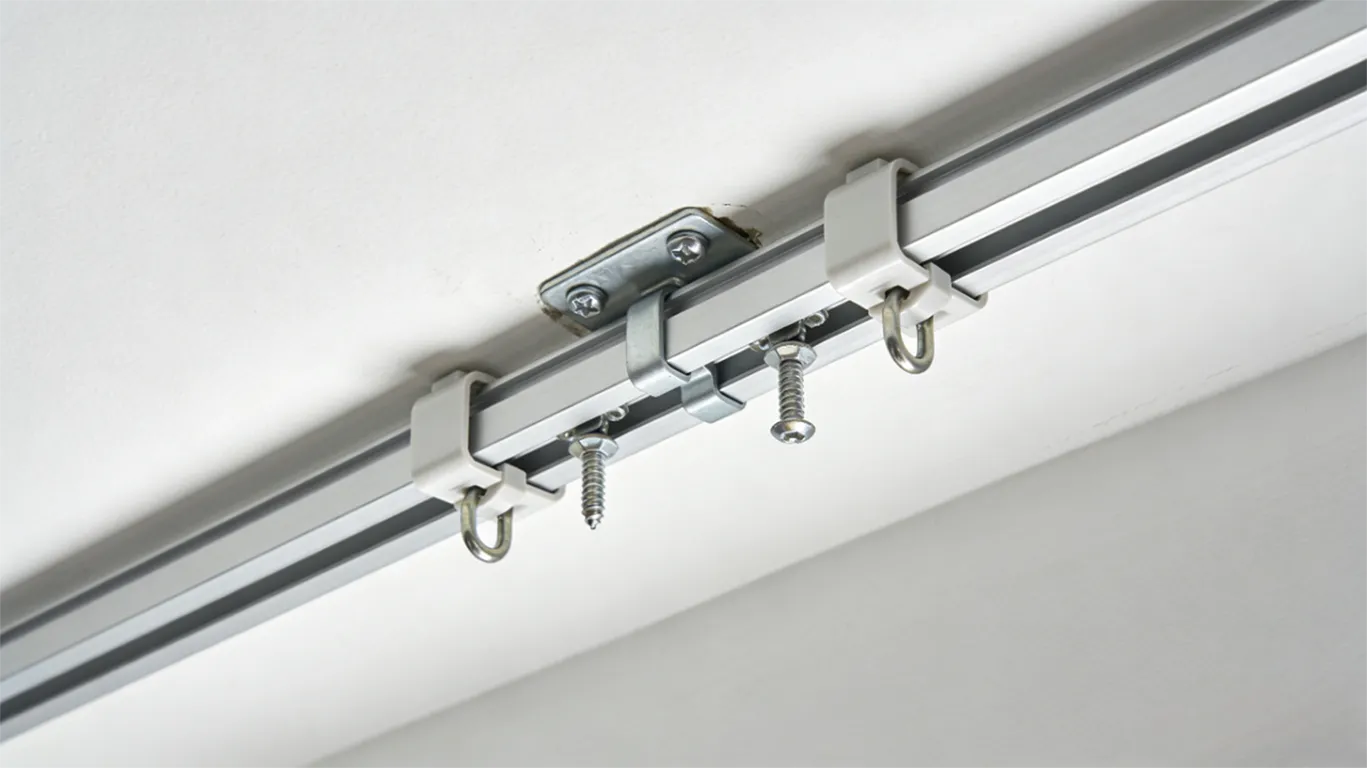
Method 1: Threaded Rod Suspension (Most Reliable)
Best for: Hospitals, hotels, commercial offices
Components:
- M8 or M10 galvanized threaded rod
- Mechanical anchor (wedge anchor or drop-in anchor)
- Load-rated curtain track bracket
- Adjustable leveling nut
Technical Parameters:
- Maximum point load: 25–40 kg per anchor
- Spacing: 900–1200 mm
- Safety factor: ≥ 4:1
Advantages:
- Full load transfer to structural slab
- Adjustable height
- Fire-code compliant when properly sealed
Method 2: Structural Backer Plate Above T-Grid
Best for: Retrofit projects where slab access is limited
Components:
- Steel or aluminum backing plate (≥ 3 mm thickness)
- Reinforced hanger wires (12 gauge)
- Track-mounted drop brackets
Key Consideration:
Backing plate must distribute load across at least two main runners.
Method 3: Wall-to-Wall Tension + Ceiling Stabilization (Limited Use)
Best for: Temporary partitions
Limitations:
- Not suitable for heavy curtains
- Requires regular inspection
- Not recommended for healthcare or public buildings
5. Load Calculations & Engineering Considerations
Typical Commercial Curtain Weights
| Curtain Type | Weight (kg/m²) |
|---|---|
| Polyester privacy curtain | 0.4 – 0.7 |
| Flame-retardant fabric | 0.8 – 1.2 |
| Acoustic curtain | 1.8 – 3.5 |
Track System Weight
- Aluminum track: 0.6–1.2 kg/m
- Steel track: 1.5–2.8 kg/m
Total system load = Curtain + Track + Accessories × Safety Factor
6. Fire, Safety & Compliance Requirements
Fire Regulations
- Ceiling penetrations must use fire-rated grommets
- Anchors must not compromise fire-resistance rating
- Curtain materials should comply with:
- NFPA 701
- EN 13773
- BS 5867
Healthcare & Cleanroom Standards
- Anti-bacterial track coating
- Sealed ceiling penetrations
- Tool-free maintenance design preferred
7. Common Mistakes Seen in Commercial Projects
- Mounting directly into ceiling tiles
- Ignoring dynamic load (curtain movement)
- Using plastic anchors above ceiling
- Over-spacing suspension points
- Mixing incompatible metals (galvanic corrosion)
Each of these can lead to system failure or inspection rejection.
8. Selecting the Right Curtain Track System for Drop Ceilings
Recommended Specifications
- Material: Extruded aluminum alloy 6063-T5
- Surface: Anodized ≥ 10 μm
- Track deflection: < 2 mm per meter
- Roller load rating: ≥ 8 kg per carrier
- Noise level: < 35 dB (hospital-grade)
9. Maintenance & Long-Term Performance
- Annual anchor torque inspection
- Visual check of suspension rods
- Track alignment verification
- Carrier replacement every 3–5 years (high-traffic areas)
Conclusion: The Correct Way to Mount Curtain Tracks to Drop Ceilings
Mounting a curtain track to a drop ceiling is never about the ceiling itself, but about how effectively the load is transferred to the building’s structural system. For B2B projects, professional-grade installation methods—such as threaded rod suspension or reinforced backing plates—are essential to ensure safety, compliance, and long-term reliability. By following proper engineering principles, load calculations, and regulatory standards, contractors and facility managers can achieve durable, inspection-ready curtain track installations in any commercial environment.